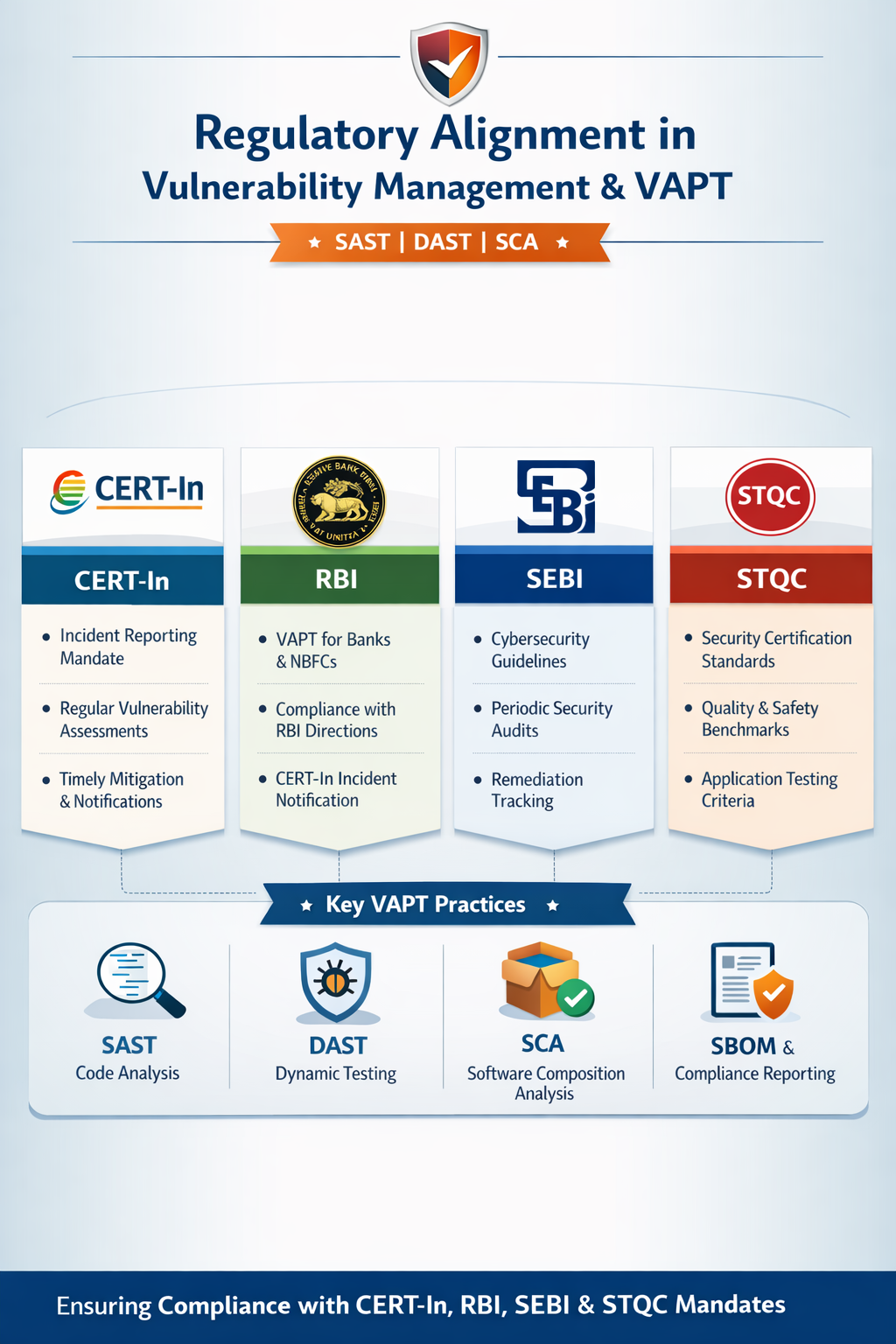
As cyber threats grow in sophistication, Indian regulators have strengthened their stance on Vulnerability Management and VAPT (Vulnerability Assessment & Penetration Testing).
CERT-In mandates timely reporting of incidents and proactive vulnerability assessments under the IT Act.
RBI Master Directions require banks and financial institutions to conduct regular VAPT, integrate findings into governance, and notify CERT-In of incidents.
SEBI emphasizes structured vulnerability management for market intermediaries, with periodic audits and remediation tracking.
STQC provides certification frameworks ensuring applications meet security and quality benchmarks.
To align with these mandates, organizations must adopt a multi-layered scanning approach:
SAST (Static Application Security Testing): Detects vulnerabilities in source code before deployment.
DAST (Dynamic Application Security Testing): Identifies runtime flaws during execution.
SCA (Software Composition Analysis): Manages risks from third-party libraries and open-source dependencies.
Best Practices for Compliance:
Integrate SAST/DAST/SCA into CI/CD pipelines for continuous validation.
Maintain SBOMs (Software Bill of Materials) for supply chain transparency.
Establish dashboards for audit readiness and regulatory reporting.
Ensure timely remediation and governance oversight.
By embedding vulnerability management into development and operations, organizations can achieve regulatory compliance, operational resilience, and proactive defense against evolving threats.
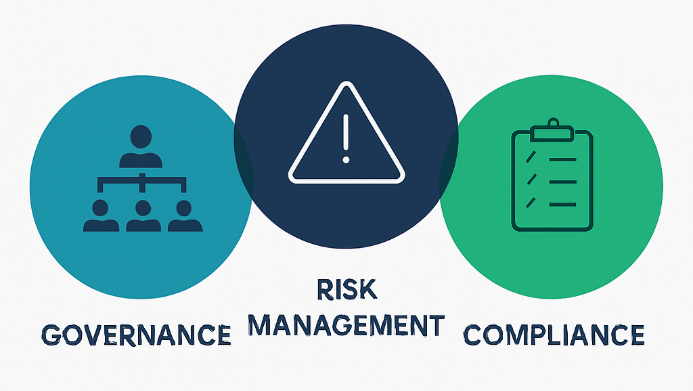


TechnoPop is a boutique System Integration (SI) and Governance, Risk & Compliance (GRC) advisory partner. We empower enterprises with secure, scalable, and defensible IT strategies that bridge technology, compliance, and business clarity.
GST: 09AAHCT0022B2ZX

Technopop - Copyright . All rights reserved.

We must explain to you how all seds this mistakens idea denouncing pleasures and praising account. All seds this mistakens idea denouncing pleasures.